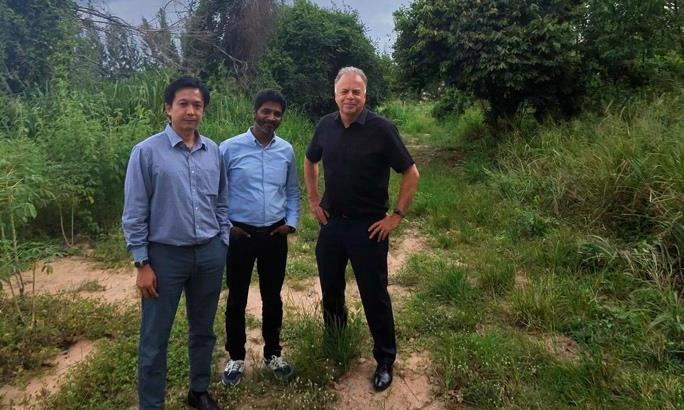
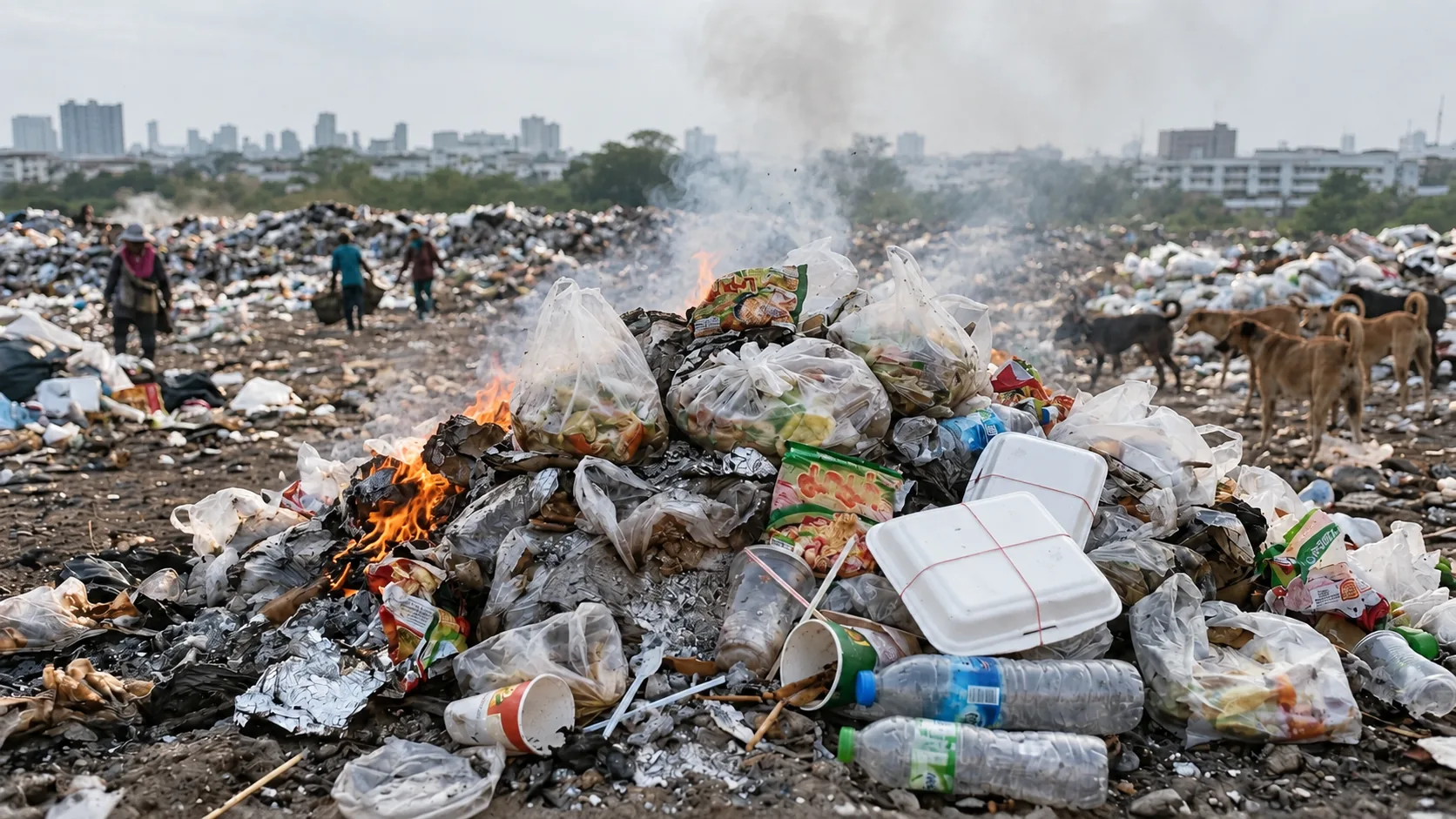
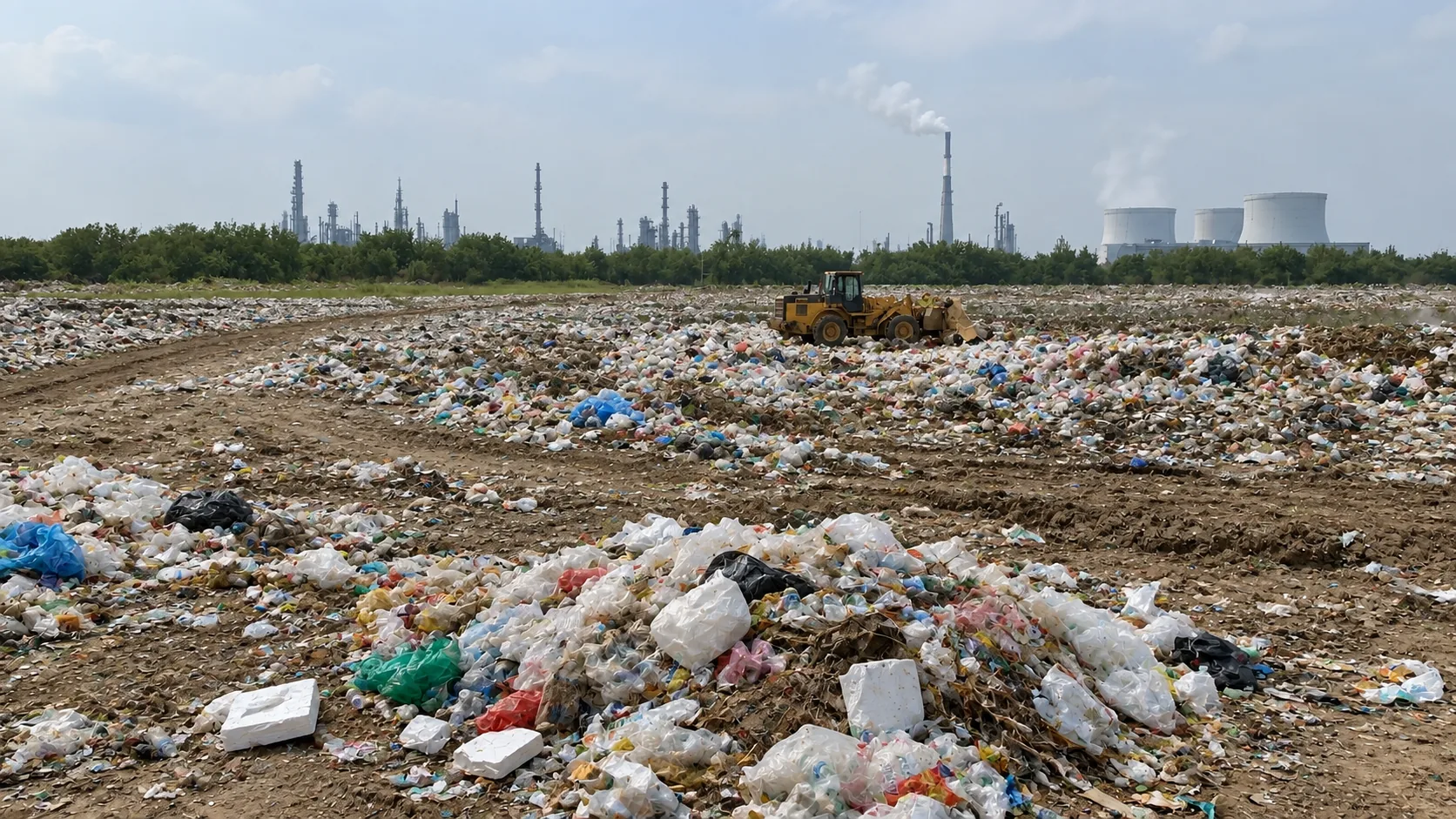
Burnt at the edge.Open burns at the perimeter of legal landfills release dioxins and microplastics into the air the city breathes.Bangkok periphery.
PET recycling is mature. Much of Thailand’s LDPE, HDPE and PP remains unrecycled. VAO plans to turn these plastics into circular refinery feedstock using world-leading technology.
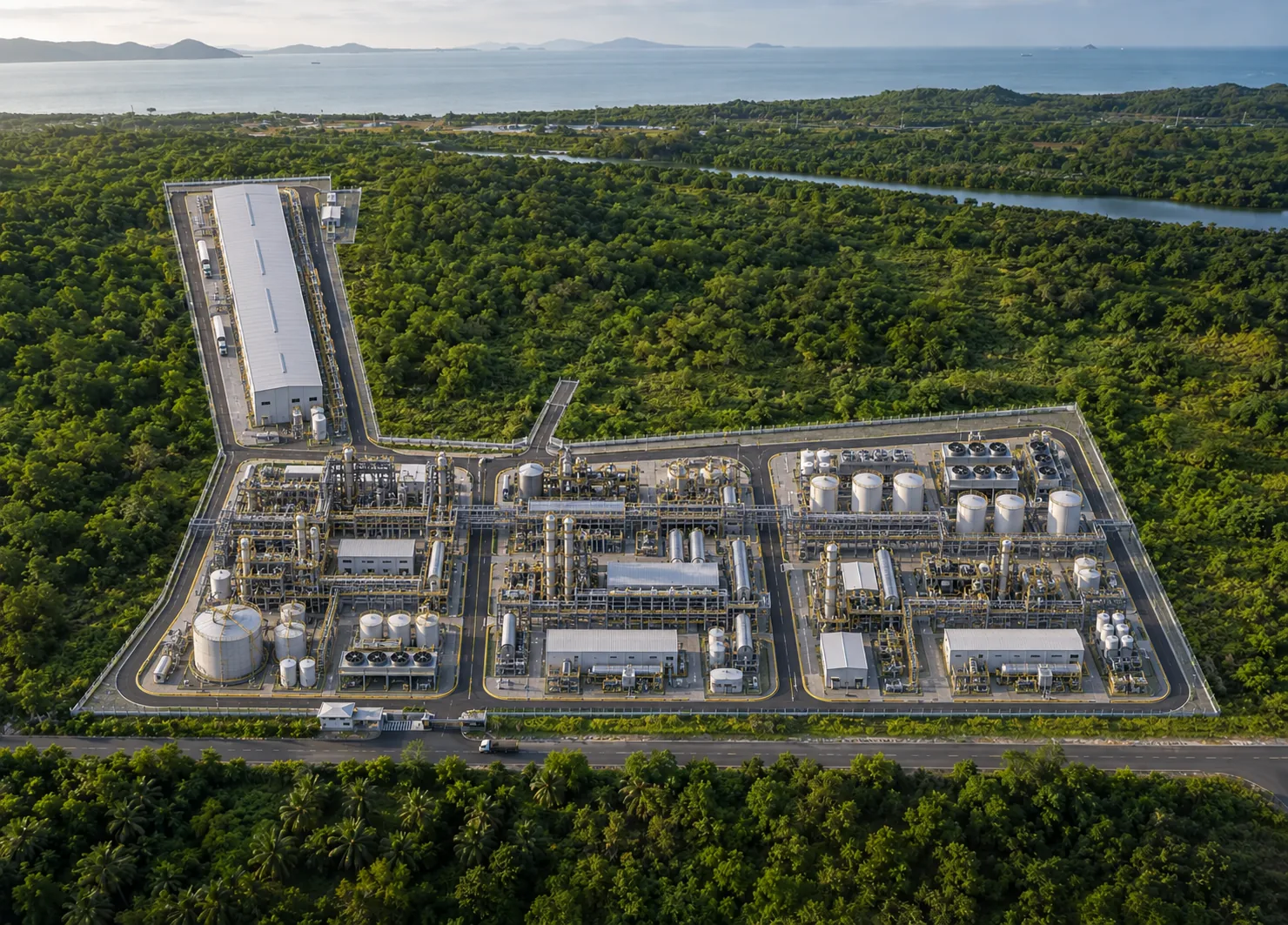
ASEAN generates millions of tons of polyolefin waste every year. Most of it gets burnt, buried, or washed into the ocean because mechanical recycling can’t process it. We are developing chemical pyrolysis capacity that can convert plastic waste into circular refinery feedstock. Phase 1 at Bo Win, Chonburi, is planned to produce 25,000 tonnes of ISCC-Plus certified pyrolysis oil per year. Target start-up is Q2 2029.
Contact the team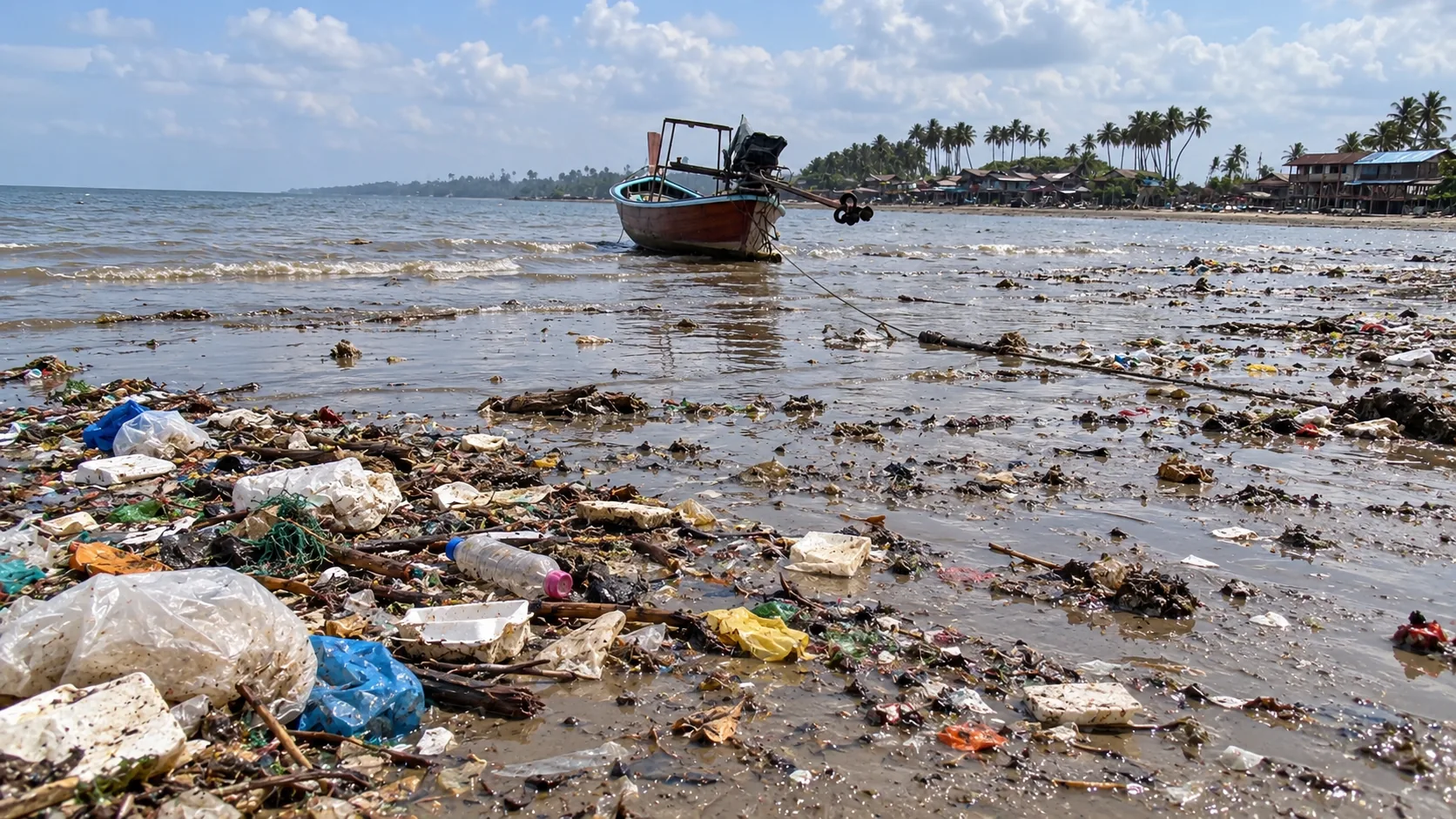
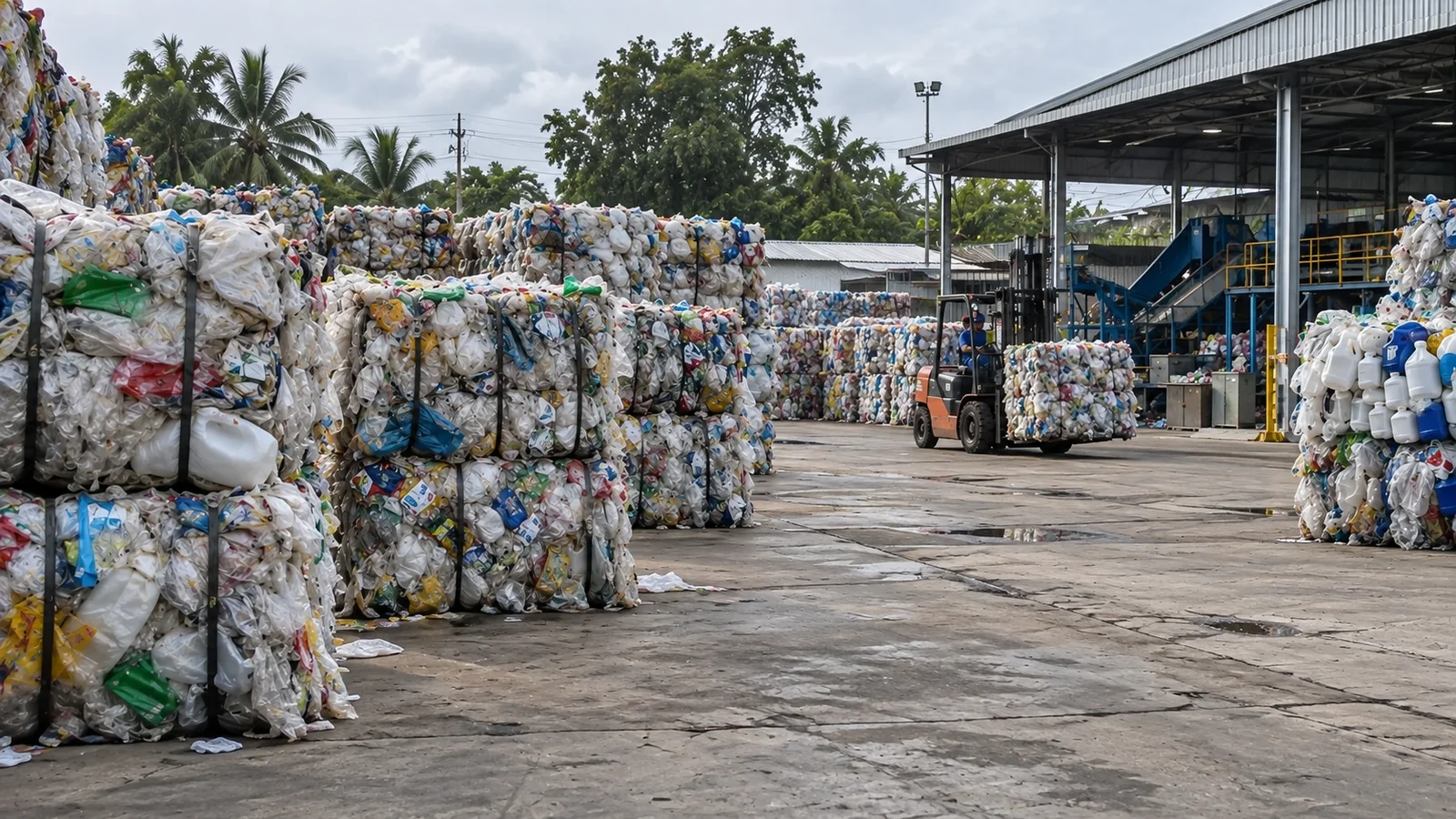
Plastic in. High quality ISCC-Plus Pyrolysis out. This planned chemical pyrolysis line using world-leading technology at Bo Win, Chonburi is designed to convert mixed-polyolefin feedstock into circular refinery feedstock.
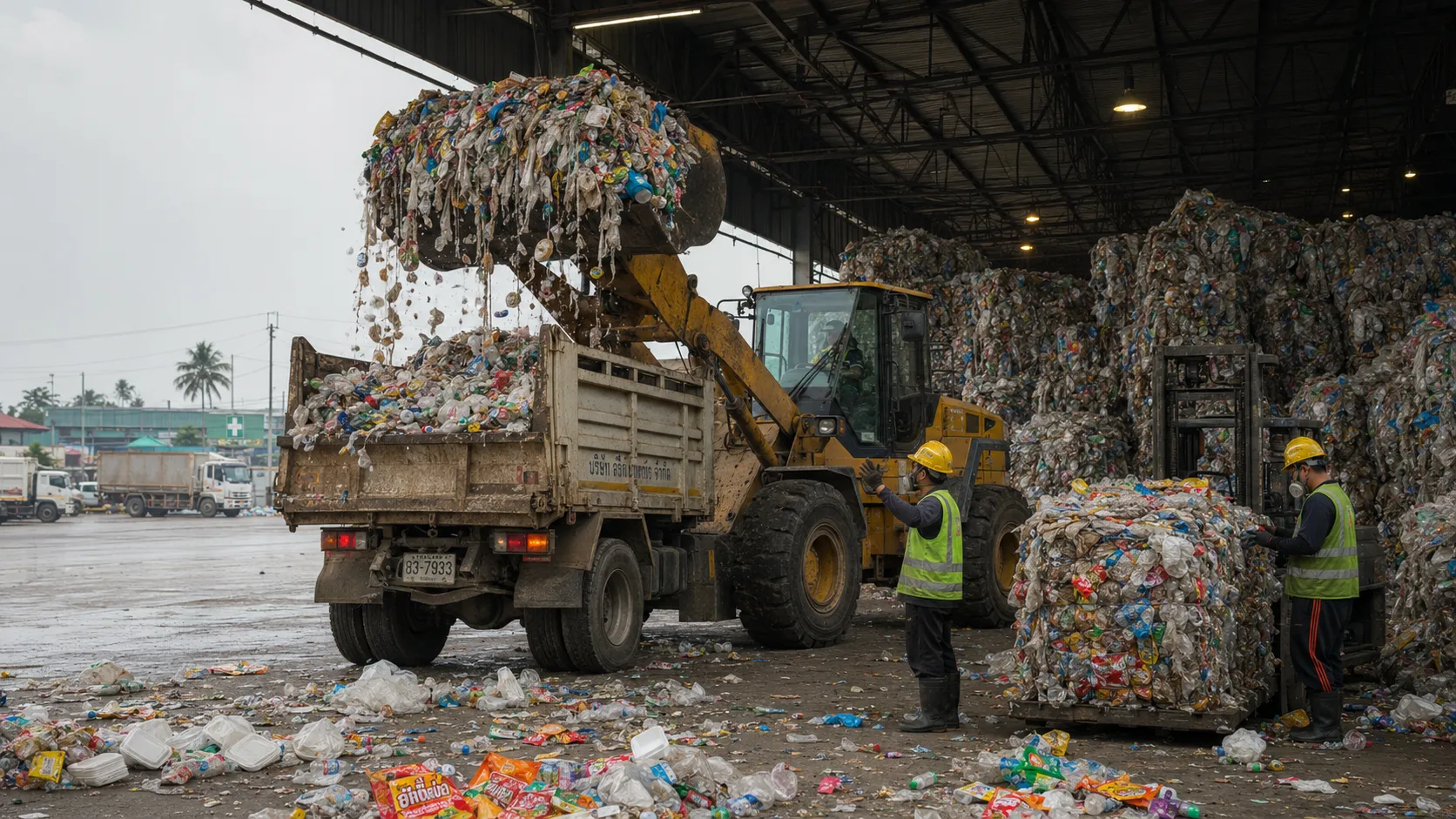
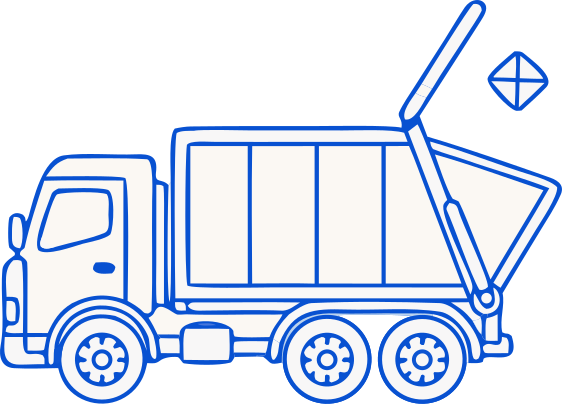
Plastic waste is pre-treated by our partners before being baled and delivered to our site.
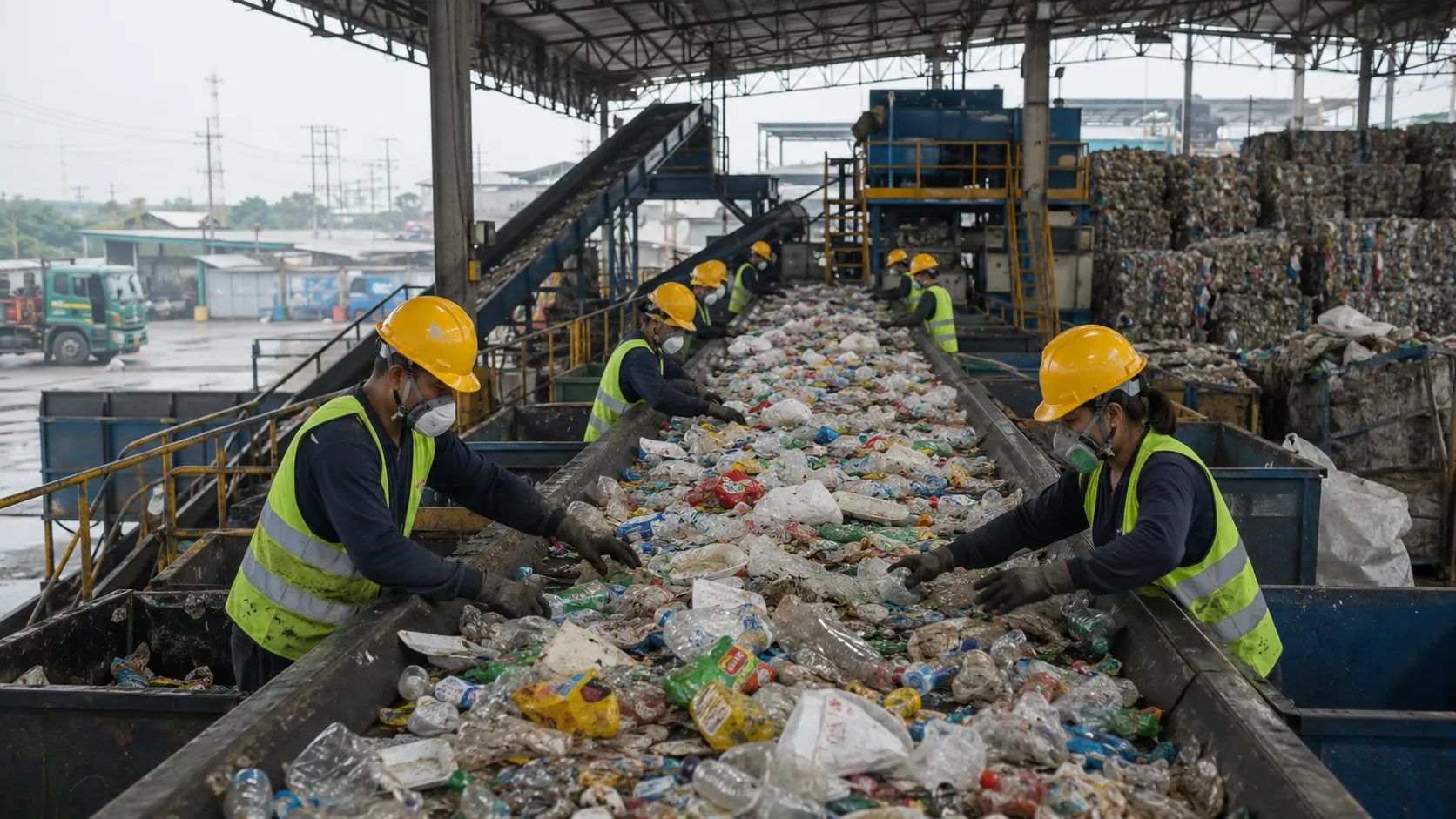
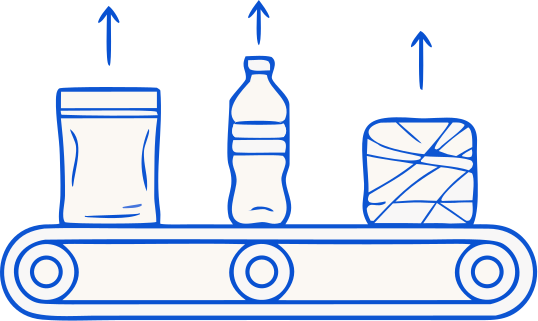
Polyolefin-only stream isolated. PE and PP separated from PVC, PET, and inorganic contaminants before any thermal step.
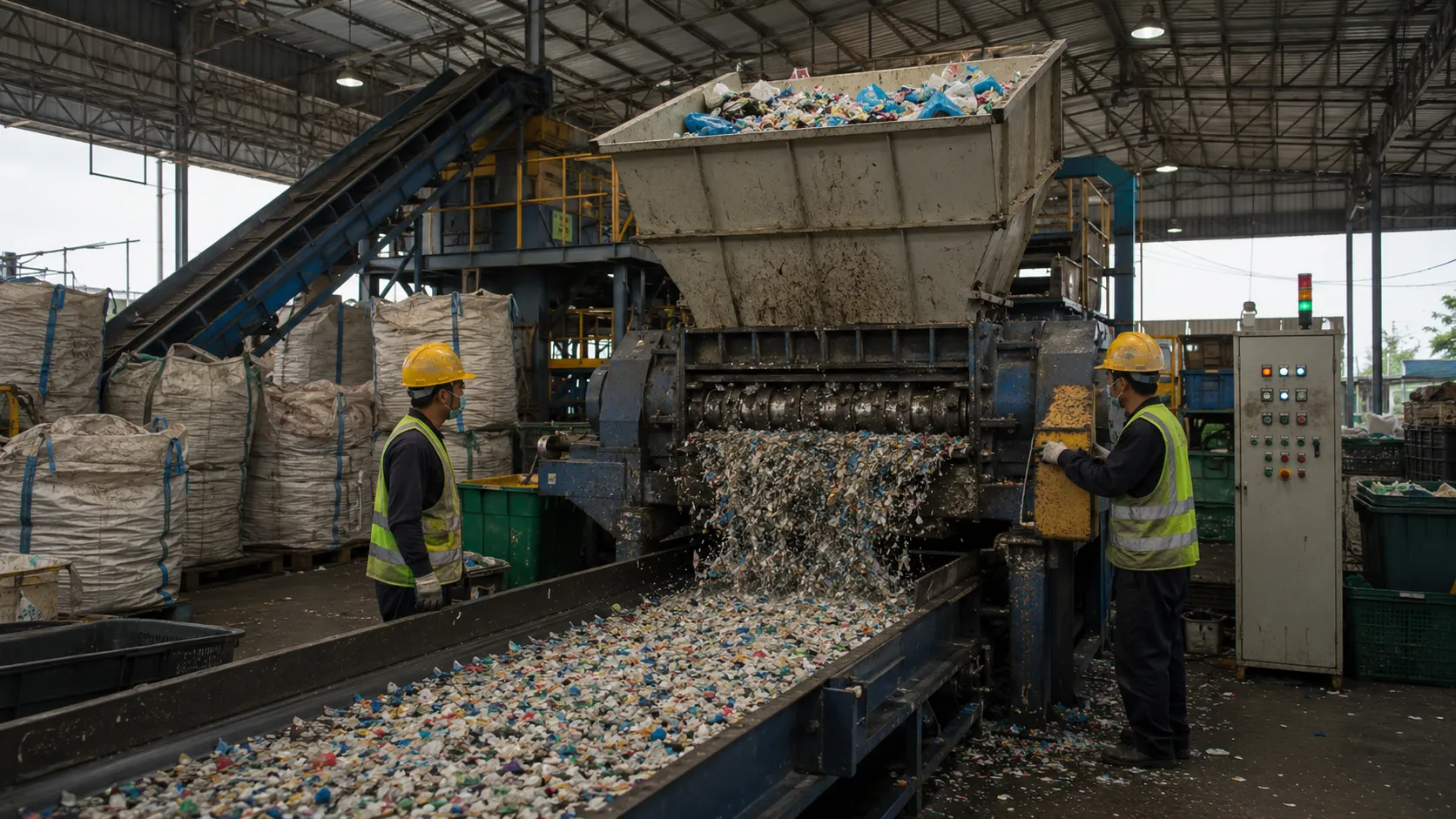
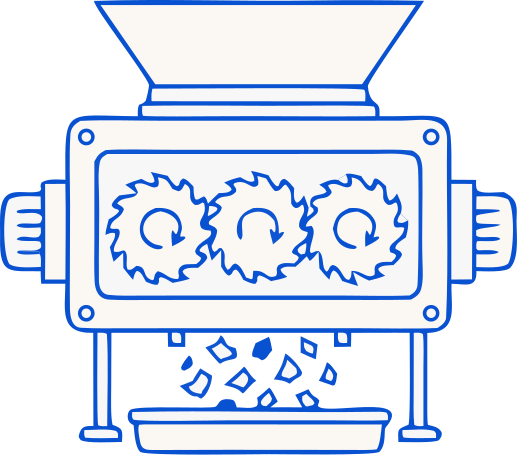
Bulk plastic mechanically reduced to uniform flake. Consistent particle size keeps downstream conditioning predictable.
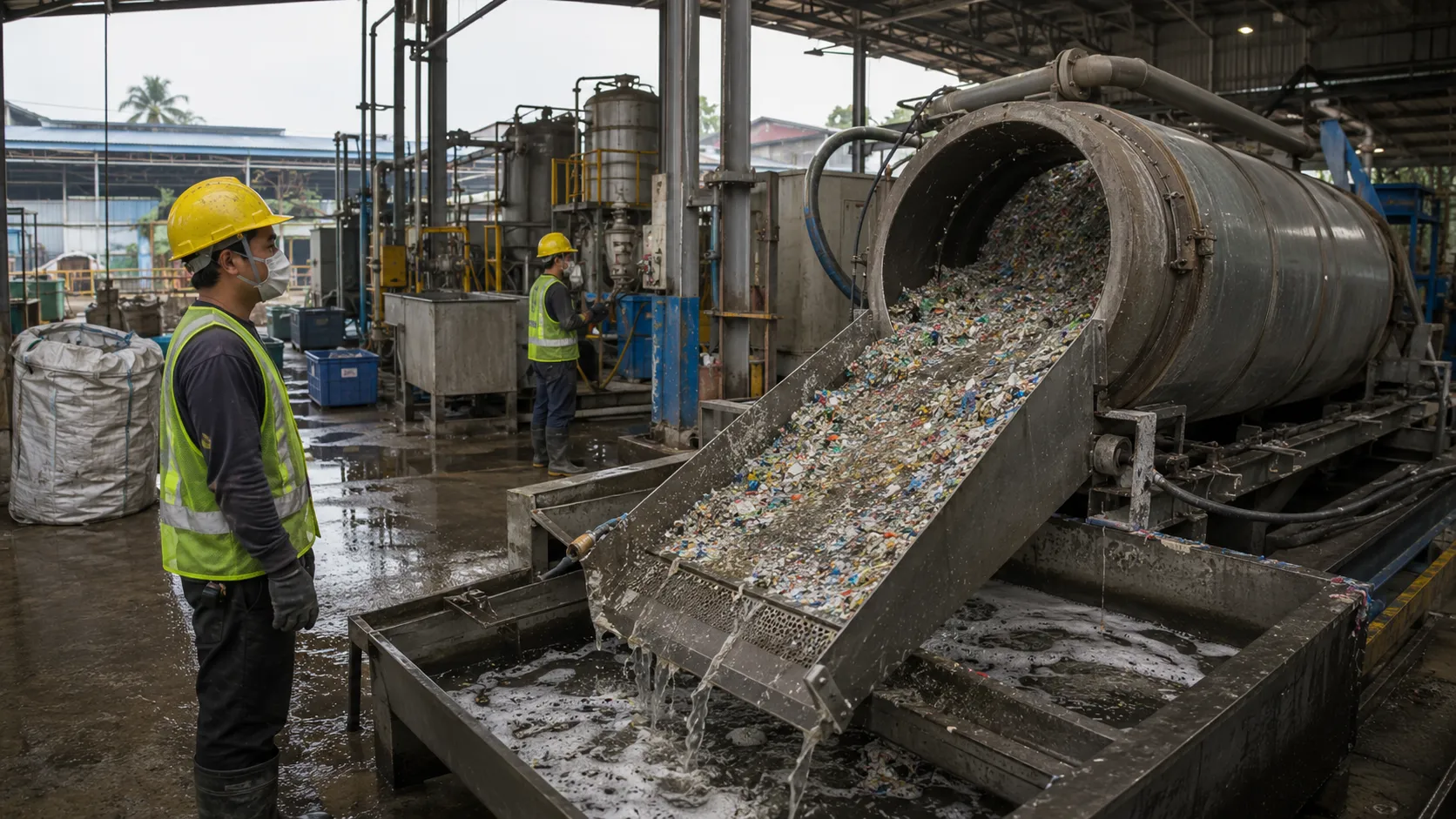
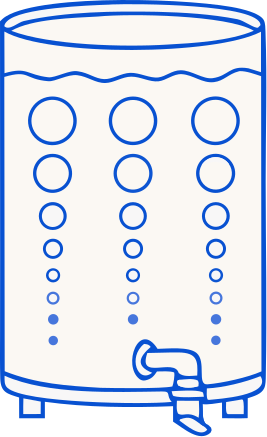
Residue, fines, and adhered organics removed. Feedstock dried and stabilised for entry into the reactor.
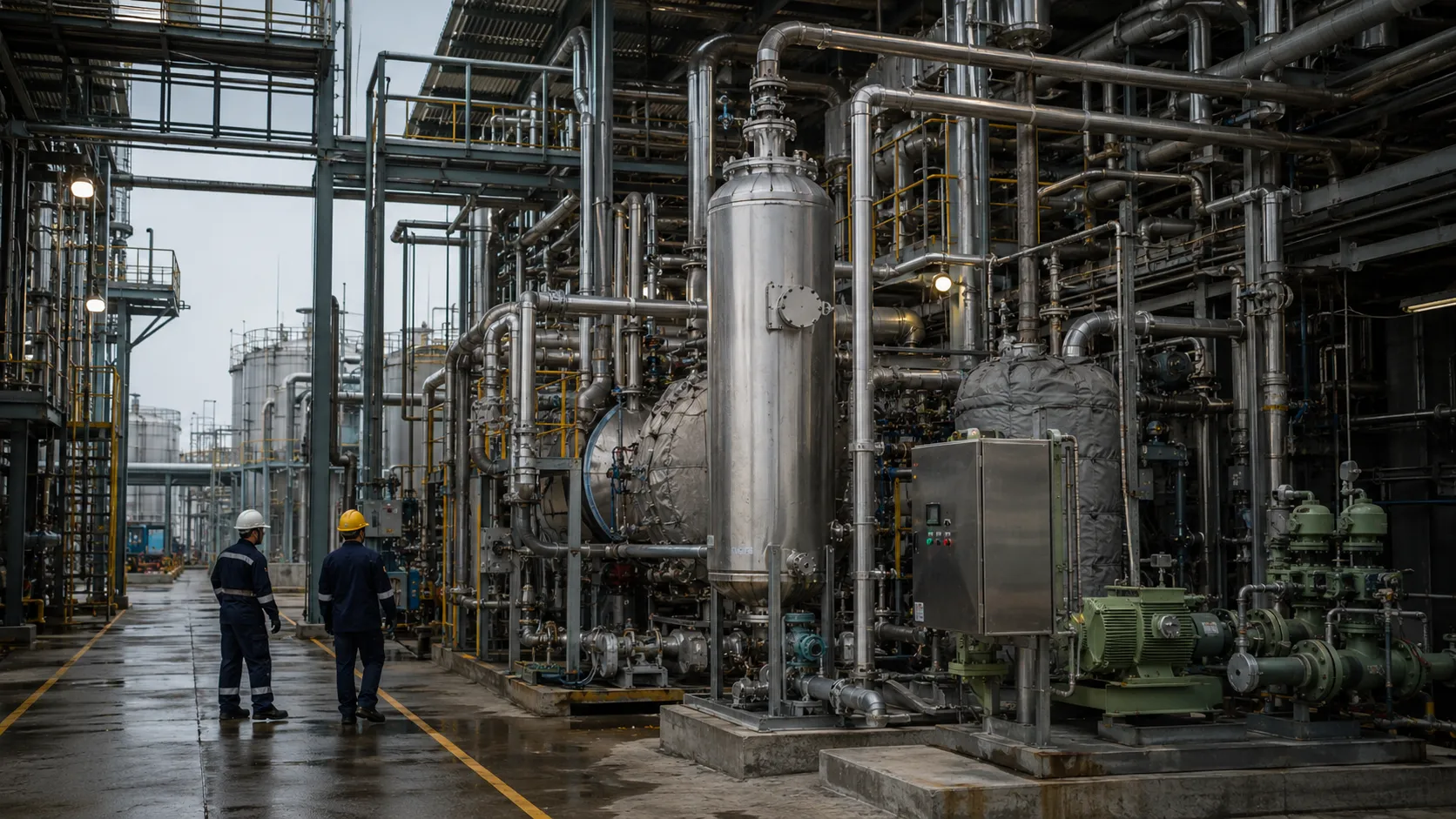
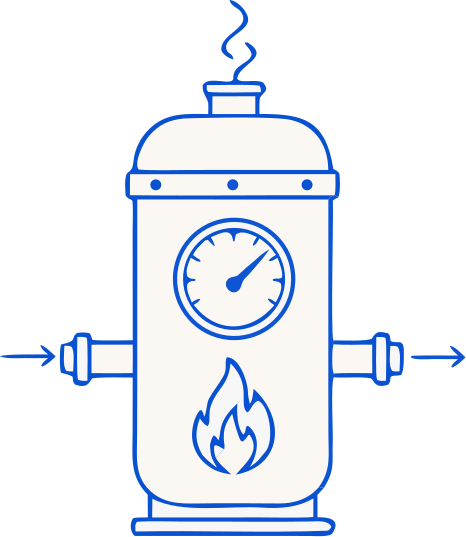
World-leading thermal cracking technology. Long-chain polymers broken back into hydrocarbon liquid in an oxygen-free environment.
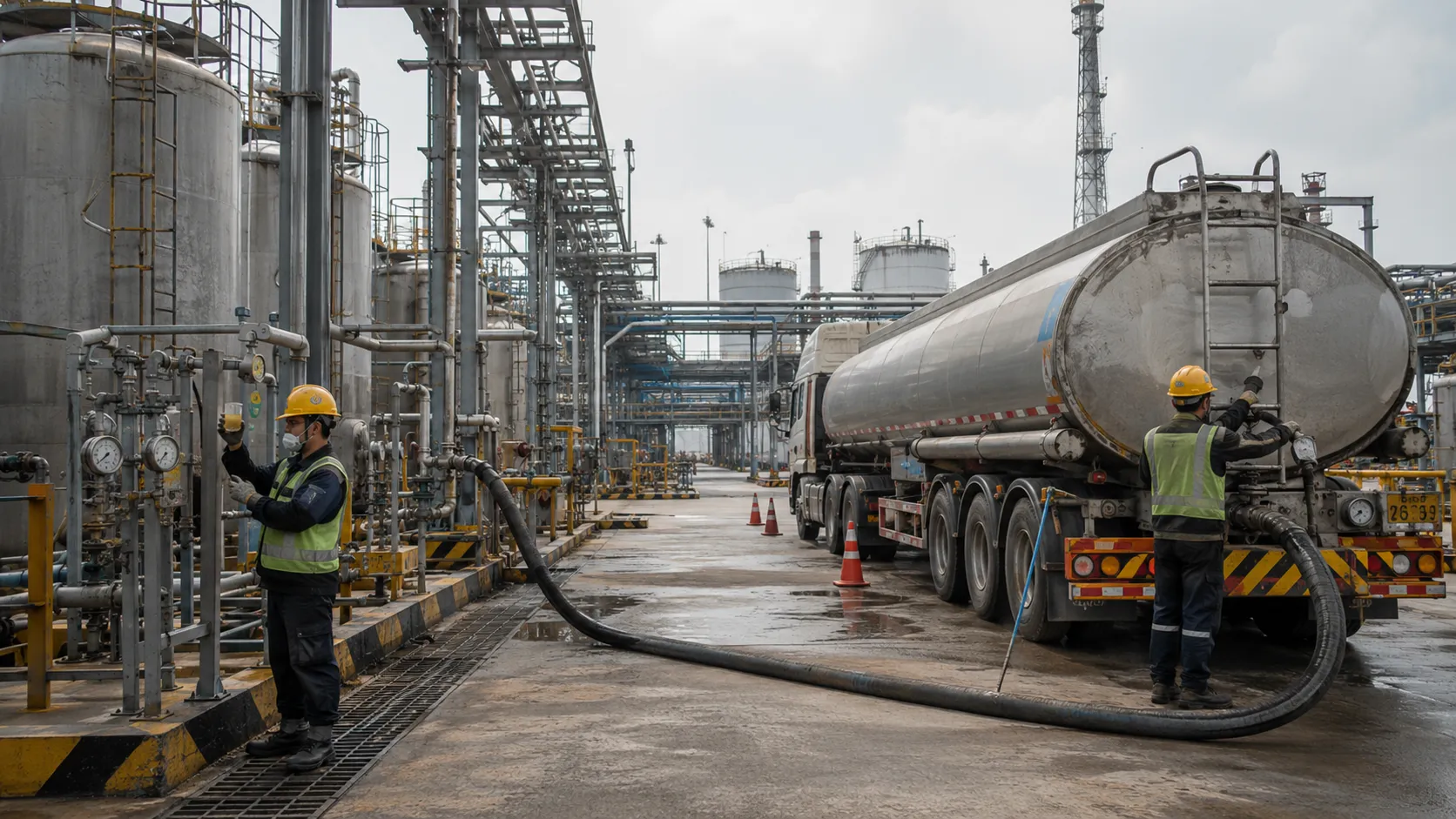
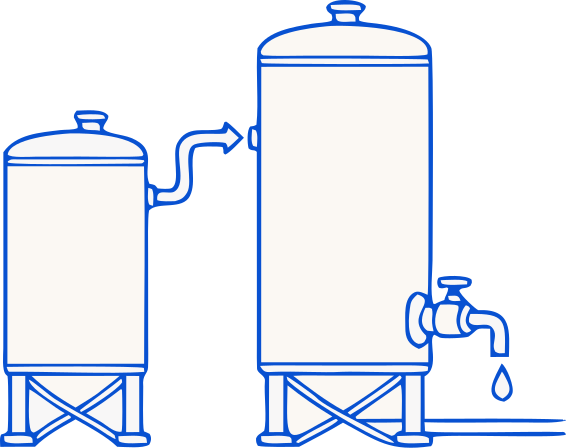
The planned process will produce pyrolysis oil for testing and potential use as circular refinery feedstock.
From our Samut Prakan pilot to the planned 90 kta of feedstock capacity in Bo Win, Chonburi, VAO is also exploring opportunities to develop a further 90 kta of feedstock capacity in Thailand, bringing the potential total to 180 kta of feedstock per year.

Source: ERM GHG emissions assessment summarized in VAO Energy’s September 2026 presentation. Estimates are subject to the study assumptions.
Project in development